
STACKING, PROPERLY
15th November 2026
Everybody’s doing it. Almost nobody’s been taught how. Herewith, the rules – and why the best stacks are never, ever bought in one go.
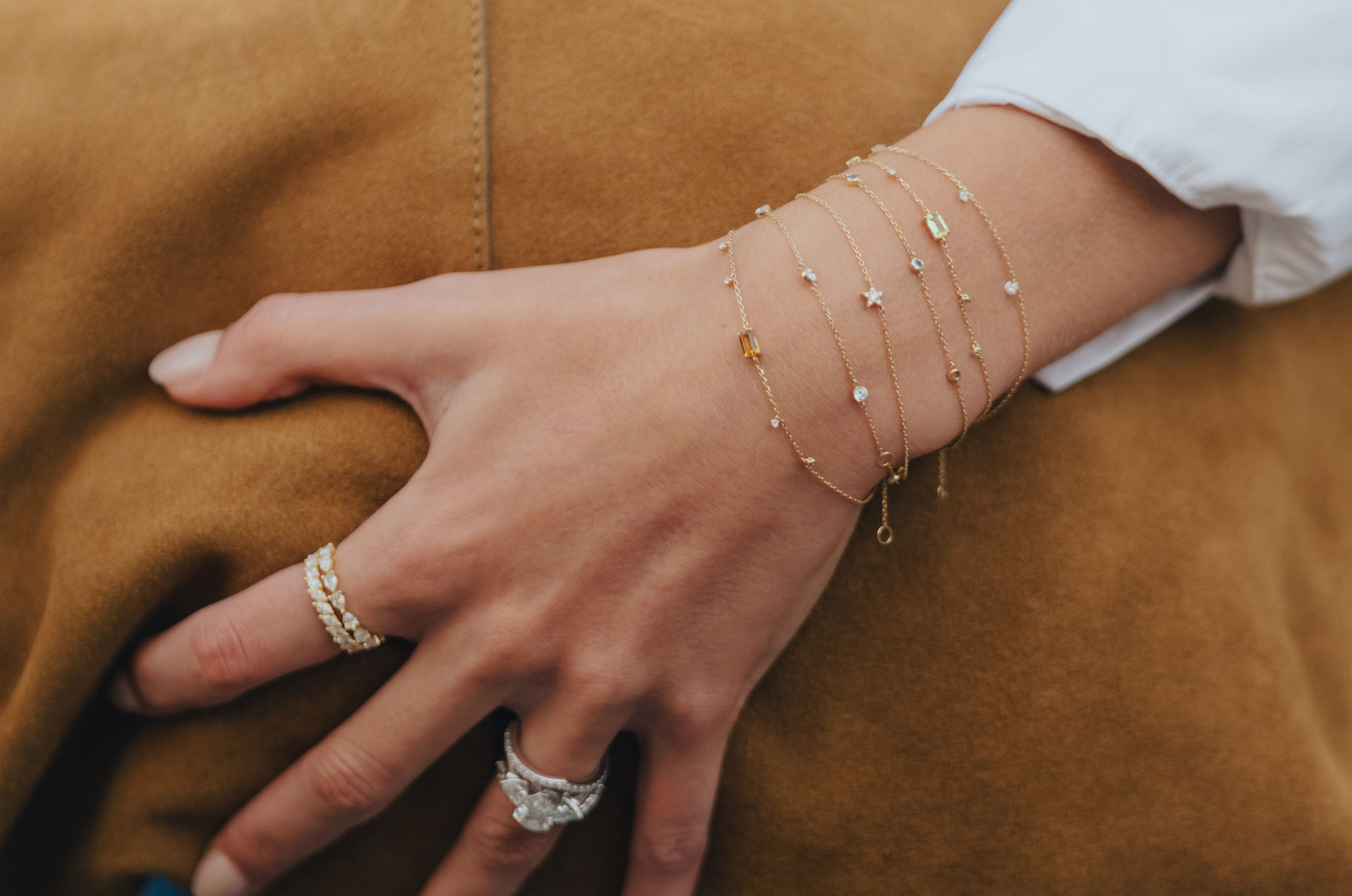
Picture two wrists. Similar money on both, similar taste behind them. One says: I thought about this. The other says: I was running late and grabbed everything.
The difference is not spend, and it is not luck, and it is certainly not some mystical gift possessed only by women who look effortless in a white shirt and good denim. It is four or five decisions nobody has ever explained to you, because stacking is always sold as a vibe and never as a skill.
So let us fix that. There are rules. They are not hard, they are not sacred, and once you know them you will never look at your own wrist the same way again. Sorry about that.
THE RULES NOBODY TELLS YOU
Odd numbers first. Three tennis bracelets read as a composition. Four read as a woman who could not decide. The eye finds perfect symmetry restful and faintly boring, which is why florists work in threes and fives and why your wrist should too. Own four things you adore? Wear three. The fourth can sulk in the box until Thursday.
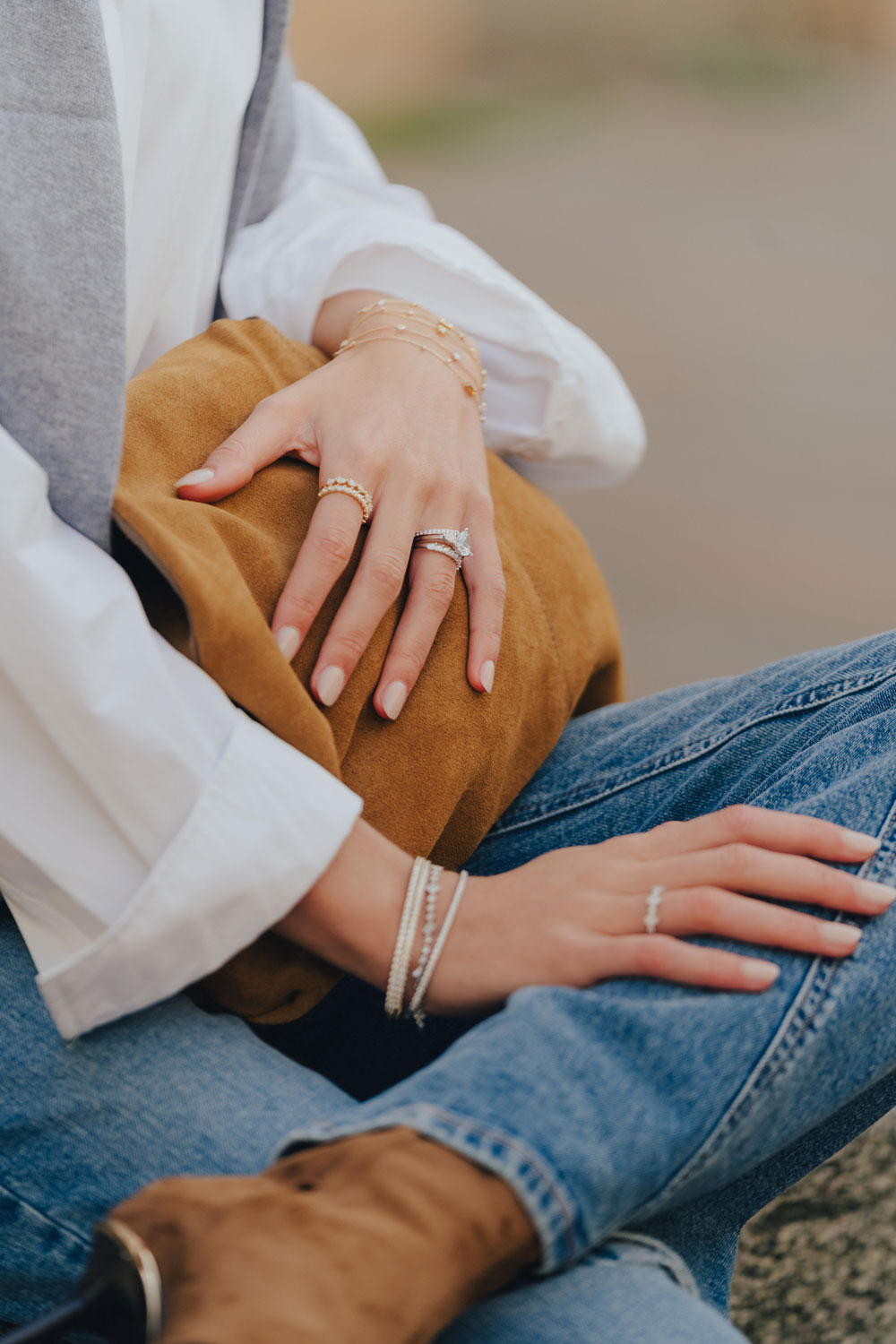
The one glorious exception is the whisper-fine chain. Gold threads dotted with a single diamond here, a coloured stone there, a tiny star – they weigh almost nothing, so they stop counting as separate pieces altogether. Five, six, seven of them melt into one glittering veil that shifts every time you move. Count those as one, and pile on.
Vary the weight. This is the one everyone gets wrong. Three bracelets of identical gauge do not read as three bracelets – they read as one thick bangle in a wig. All that lovely individual craftsmanship vanishes into a single band, and you have effectively paid three times for one object. Contrast is what makes each piece visible: a fine diamond line, a slightly heavier one, and a third set with larger stones spaced like punctuation. Now you can see all three, and each one is flattering the others by refusing to match.
Leave room. Negative space is doing more heavy lifting here than any actual jewellery. A bracelet with a gap between it and your wrist moves, slides, catches the light, behaves like something alive. A stack rammed tight against itself is not a stack. It is a cuff, and it is cross. And every stack needs a hero – one piece that is visibly the reason for the entire enterprise. The tennis bracelet with the serious stones. The engagement ring. The one you would run back into a burning building for. Without a focal point the eye roams about the hand like someone hunting for their seat in a dark theatre, and concludes, wrongly and rather rudely, that nothing here is worth much. The supporting cast are not competing with your hero. They are holding the frame.
“We always say diamonds love company,” says Donna Hogg, Buying and Merchandising Director at ROX. “Whether it’s a perfectly layered necklace stack or rings worn across both hands, the magic happens when beautiful pieces come together to create something unexpected.”



THE METAL QUESTION
For most of the twentieth century, mixing yellow and white gold sat somewhere on the etiquette scale between wearing white to a wedding and putting ice in red wine. Your grandmother had views. Possibly she shared them.
That rule is gone, thank goodness, but its ghost lingers as a sort of low-grade anxiety about whether one is Allowed. One is. The only thing to remember is this: repeat yourself.
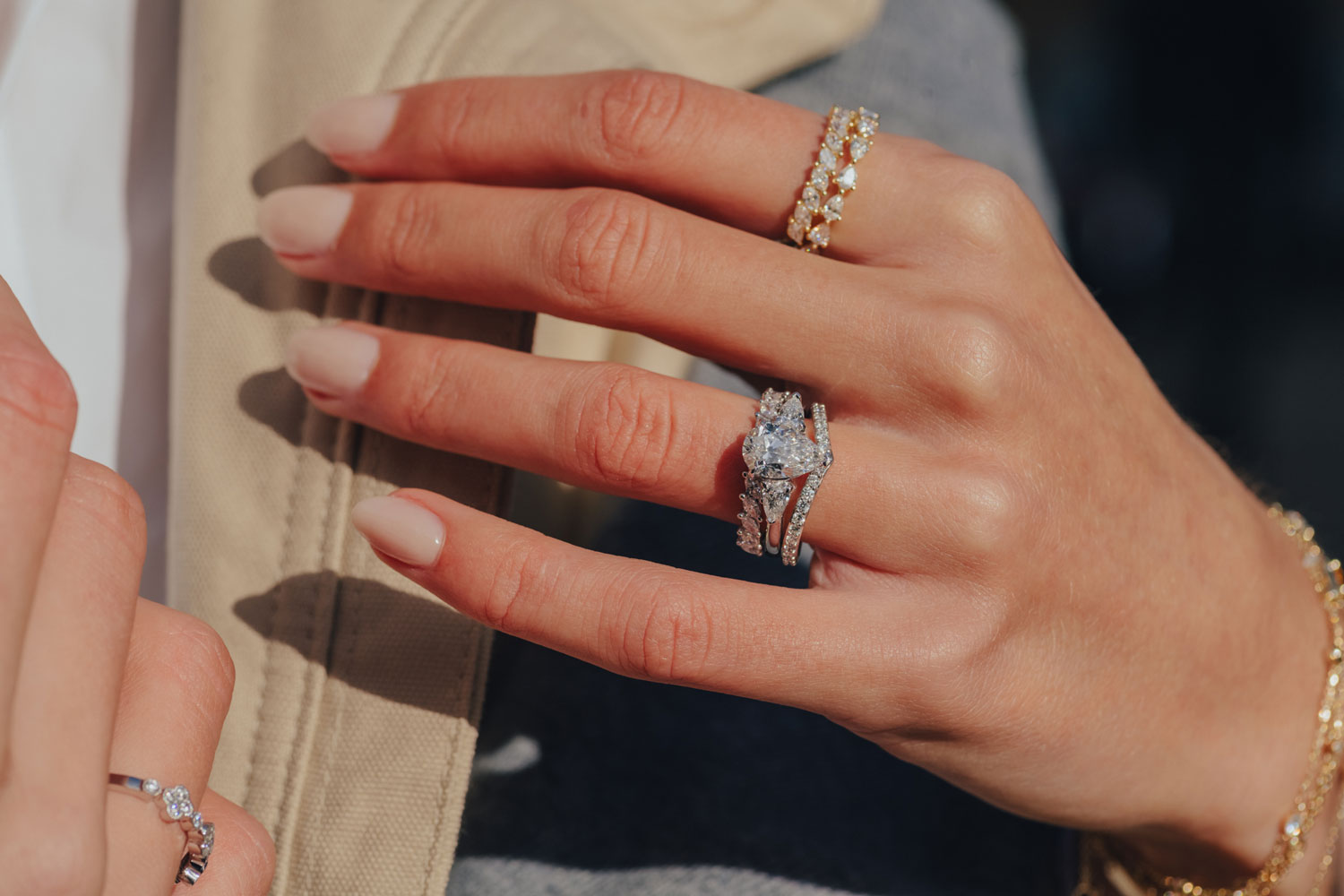
A lone yellow gold piece adrift in a sea of white reads as an accident – as though it wandered in from another outfit. The same metal echoed reads as a decision. Yellow gold eternity bands on the middle finger, right beside a white gold engagement ring, look intentional the moment a fine gold chain picks up the yellow again at the wrist. Once is a mistake. Twice is a choice. Three times and you have a signature.
Or split the difference by wrist. White gold tennis bracelets on one side, a veil of fine gold chains on the other, and the rings tying the two hands together in the middle. Each wrist is tidy on its own; together they look like someone who knows exactly what she is doing. Two-tone pieces do this work on your behalf, which is why they earn their keep far beyond their looks. A ring or bracelet carrying both metals gives everything around it permission to be either, and quietly holds a mixed stack together like a good hostess.
One unglamorous note. Metals of different hardness sitting against each other all day will mark, and the softer one loses – every time, no appeals. High polish shows it; brushed finishes swallow it. This is not an argument against mixing. It is simply the news that jewellery worn constantly will come to look worn, and that this is not damage. It is a CV.
CHAINS OF THOUGHT
Necklace layering is nearly always explained through chain length – 16, 18, 20 inches, tiering down the chest like a very tasteful waterfall. Marvellous advice, if you happen to own chains in three lengths. Most of us own two and a tangle.
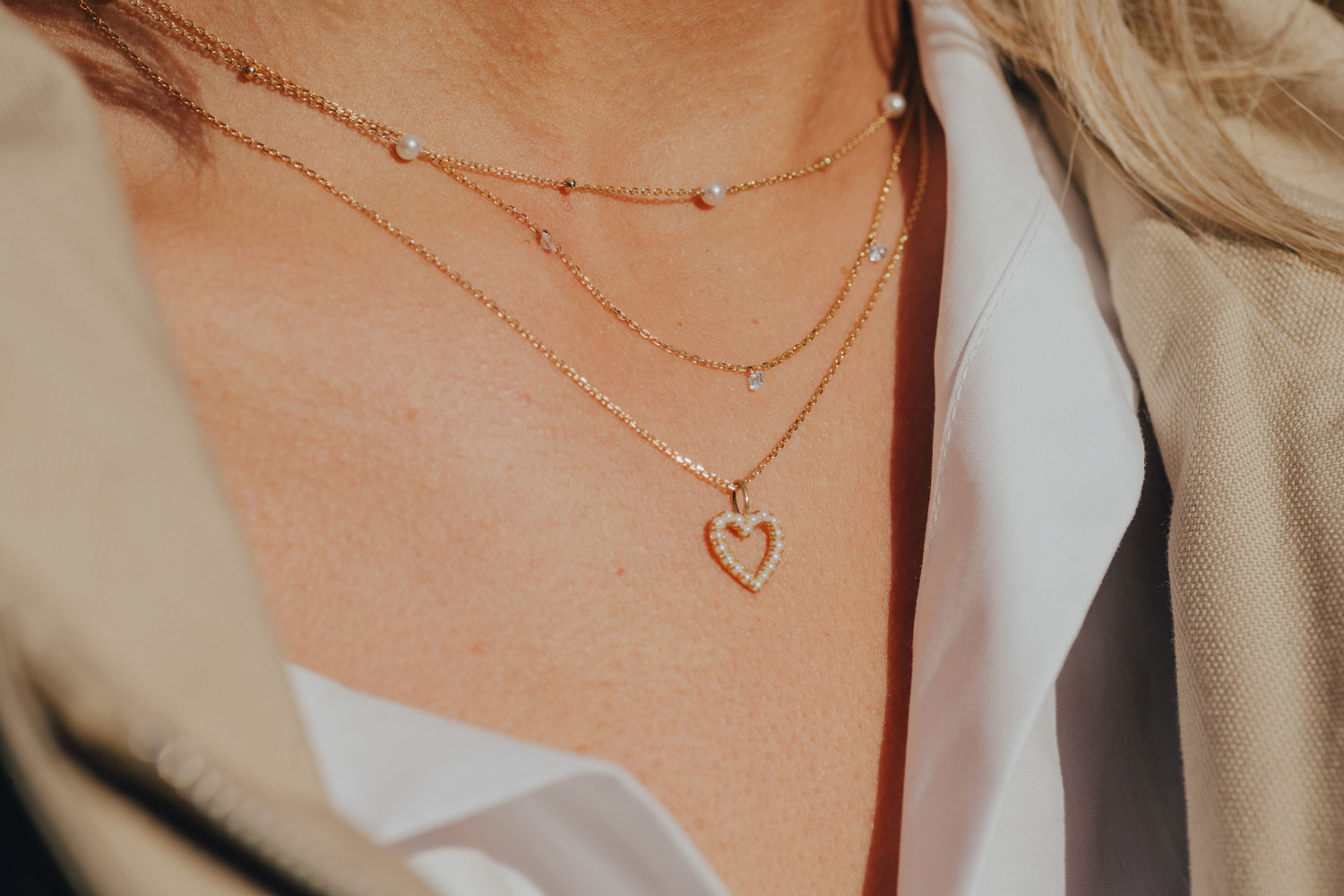
Which is fine, because length is not really the variable that matters. Drop is. What hangs off the chain decides where the visual weight lands. A fine chain sitting high at the collarbone with a scattering of tiny stones is playing a completely different game from an open heart picked out in pavé, swinging lower on its own. ROX’s chains run 16 to 18 inches adjustable, so set one at each, then choose pendants that hang differently – and there is your layer, no third chain required.
Texture counts as much as drop. A chain stationed with little pearls beside one carrying a single diamond beside the heart: three pieces, three finishes, not one of them repeating another. That is the necklace version of varying the weight, and it is why the stack reads as layered rather than knotted.
The buying principle that follows: when the chains are fixed, collect pendants that do different things. Two solitaires at marginally different lengths will forever look like one necklace having an identity crisis. A solitaire and something with body – a heart, a cluster, a shape – looks like a layer, and takes about four seconds to put on.
Then look up. Earrings are the most forgotten member of the stack and often its best supporting actor. A long, slim hoop draws a clean vertical line from ear to collarbone, so the necklaces below it look deliberate rather than busy. Keep the ears sleek when the neck is layered; save the statement drops for days the neck goes bare.

THE ART OF THE RING
“The secret to great layering is making it feel as though it happened naturally,” says Donna. “Start with a signature piece, then build around it with contrasting lengths, textures and precious metals that tell your story.”
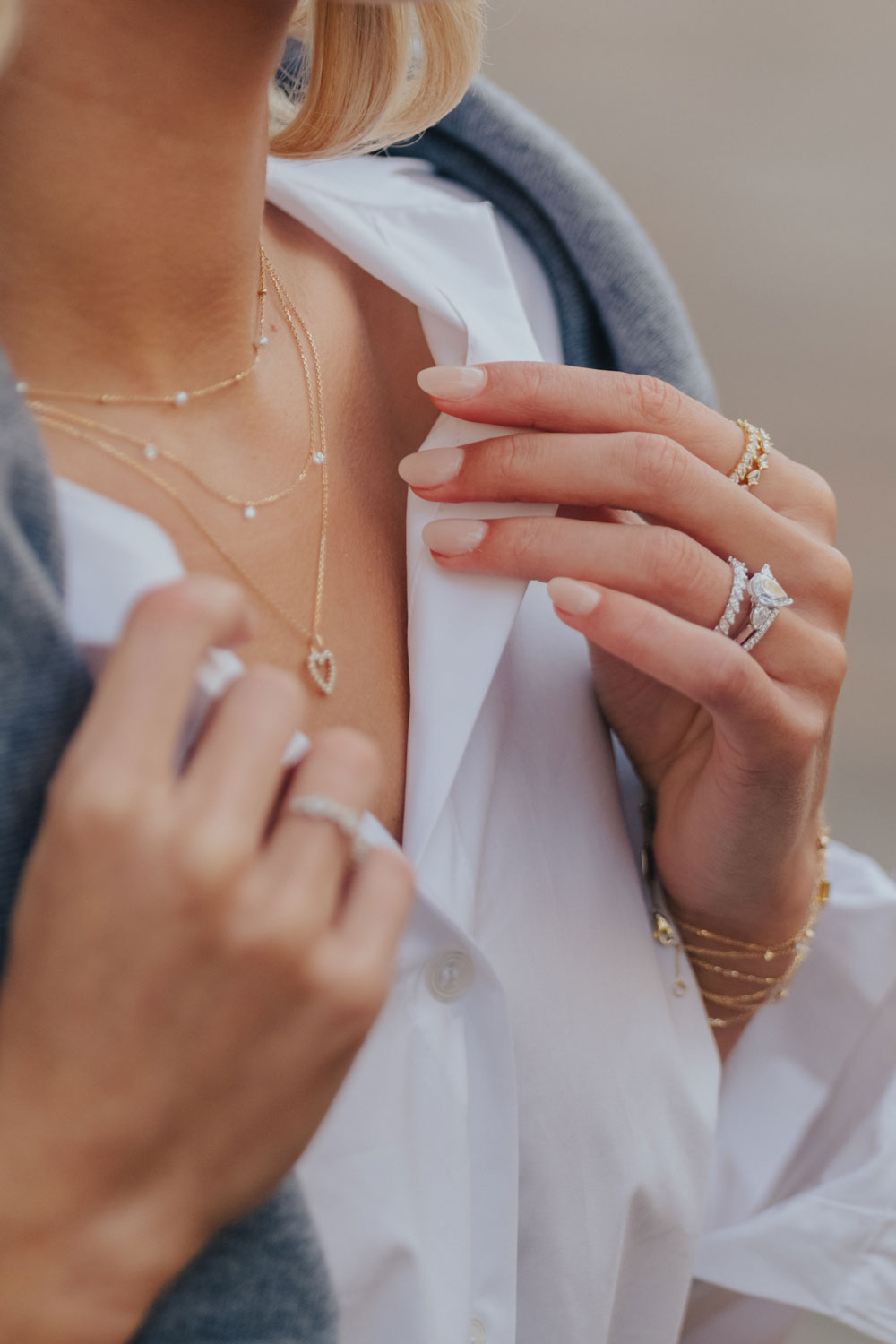
On the hand, the signature piece is usually obvious: the engagement ring. Everything else is there to frame it, and the setting dictates terms.
A raised solitaire or halo needs a shaped or curved band to sit flush, which is precisely why curved bands exist, and why jamming a straight one alongside leaves a gap you will think about at three o’clock in the morning for the rest of your natural life.
Then give it neighbours rather than rivals. Two slim eternity bands on the middle finger, in the other metal, do exactly this – close enough to keep it company, far enough to let it shine. Stacked on one finger, graduate the widths with the broadest at the base, or the whole thing goes top-heavy and starts migrating towards your knuckle mid-conversation. Mix the profiles, too: a plain line of stones beside a band with a little scallop or shape to it reads as two pieces rather than one fat ring.
Across fingers, leave gaps – one on every finger reads as costume, or possibly tarot. A fine band on the other hand is all the balance you need.
PIECE BY PIECE
“The most interesting jewellery collections aren’t bought in a day,” says Donna. “They are layered over time, with every piece adding another chapter to the story.”
Which is exactly right, and it is why a really good stack cannot be faked. Almost everything in one arrived attached to something – a birthday, a promotion, a person, a year that badly needed marking. Nothing bought in a single furious afternoon has that, however much was spent, and everyone can tell.
There is a usefully practical consequence. Buy for the stack you will own in ten years, not the one on your wrist this evening. Favour pieces that will still make sense beside things you have not chosen yet – the fine chain bracelet, the tennis bracelet, the eternity band, the solitaire – and be entirely relaxed about the fact that your stack is, right now, incomplete. It is meant to be. It will be incomplete for decades. That is the whole job.
“Stacking isn’t about wearing more, it’s about wearing meaning,” Donna adds. “Every ring, bracelet or necklace should bring something personal to the look, creating a collection that’s uniquely yours.”
So. Odd numbers. Varied weight. Room to move. One hero. Repeat your metals. Five rules, none of them taxing, all of them worth knowing – and then twenty years from now you may break every single one, because by that point you will have earned it, and because the wrist that looks effortless almost never is.
Start your stack at the ROX showrooms in Glasgow, Edinburgh, Newcastle, Leeds, Liverpool and London, and at rox.co.uk..


CONTINUE READING
LOVE IN COLOUR
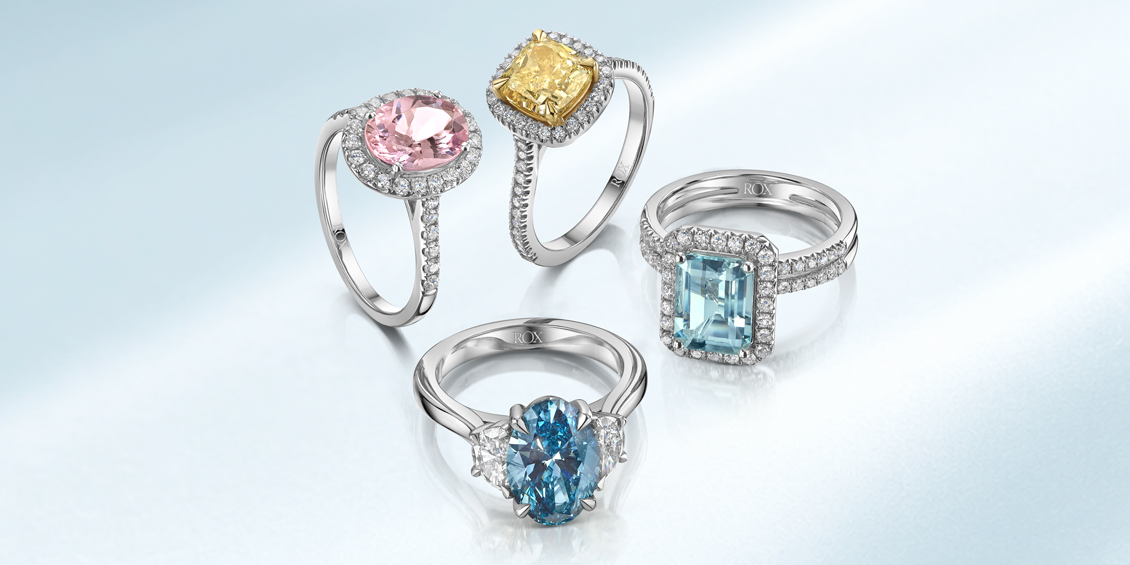
After two decades of white-on-white, the coloured stone is having its moment again and ROX has quietly built one of the more interesting collections in the country.
MIDNIGHT FEAST
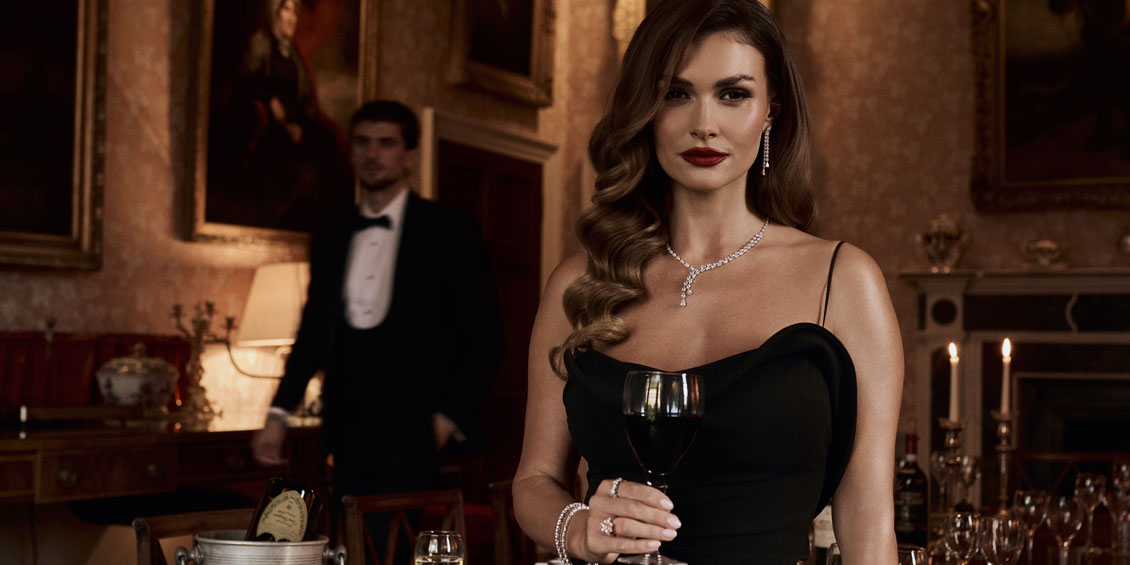
A decadent feast unfolds after dark, where elegance meets a hint of beautiful chaos. Statement jewellery take centre stage in a scene of indulgence and intrigue.
COLOUR CODE
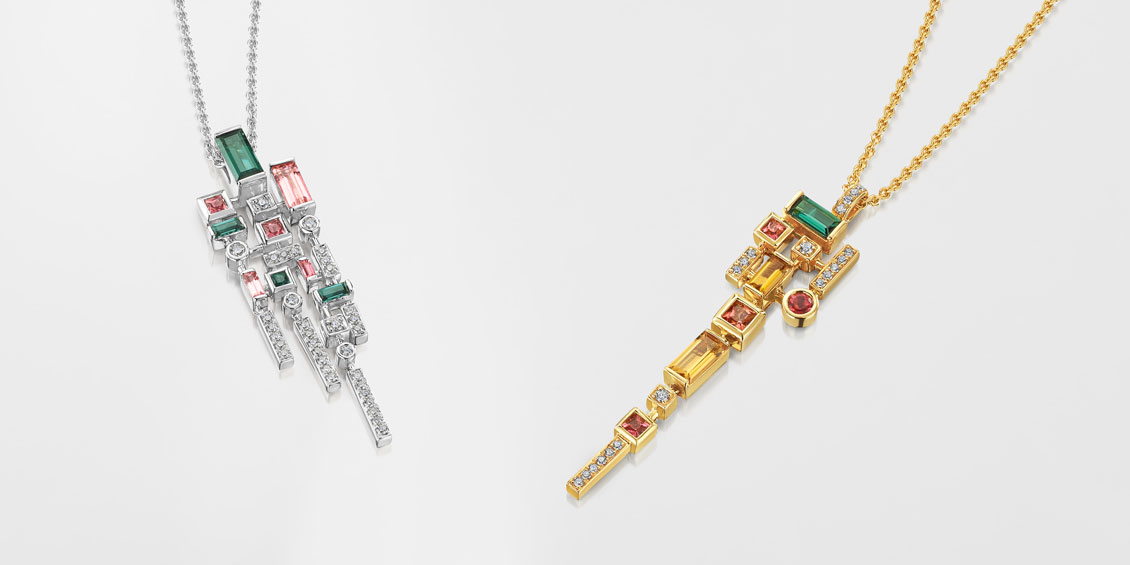
Introducing a new addition to ROX Code Collection. Diamonds, tourmalines and colours unite in a radiant new era of expression.