
LOVE IN COLOUR
13th November 2026
Morganite, aquamarine and tourmaline. After two decades of white-on-white, the coloured stone is having its moment again and ROX has quietly built one of the more interesting collections in the country.
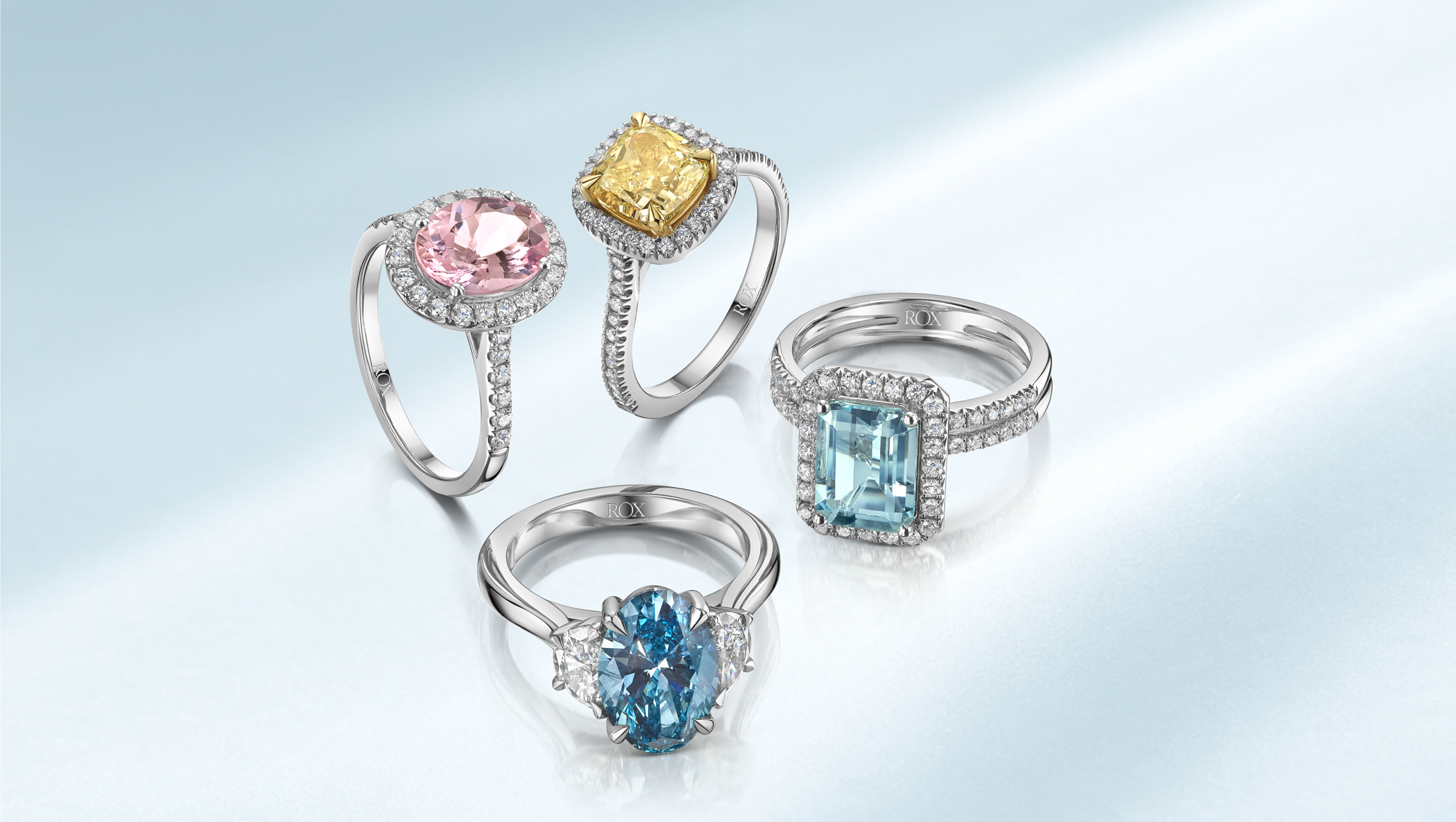
There is a moment, usually about four minutes into looking at a tray of diamond rings, when somebody says the thing they have been thinking since they walked in: is it allowed to not be a diamond?
It is, obviously. It always has been. Napoleon gave Josephine a sapphire. Princess Diana’s ring – the one that became the most photographed piece of jewellery of the twentieth century and then, in due course, of the twenty-first – was a sapphire too, and unfashionable at the time for precisely that reason. Victorians thought nothing of an emerald. The idea that a serious piece of jewellery must be colourless is not an ancient tradition; it is a twentieth-century marketing triumph, and it is currently coming loose at the edges.
What is replacing it is more interesting than a straight swap. Colour has returned not as rebellion but as preference – people choosing the stone they actually respond to rather than the one they assume they ought to want. Which makes it worth paying attention to who is stocking it properly, because plenty of retailers are treating colour as a novelty line. ROX is not. Across its six showrooms the jeweller has built a coloured stone offering that runs from a two-and-a-half-thousand-pound halo ring to full suites, and the choices behind it are more considered than the category usually gets.
THE SIBLINGS
Here is a fact that delights me every time I remember it: morganite and aquamarine are the same mineral. Both are beryl. So is emerald. The species is identical; what differs is a trace of something else entirely – manganese turns beryl pink, iron turns it blue-green, chromium turns it emerald – which means a rose-coloured morganite and a pale sea-blue aquamarine are, at the level of crystal structure, sisters who took different paths.
Aquamarine takes its name from the Latin for seawater, and sailors once carried it as a talisman against drowning, which tells you everything about how the colour reads: clear, cool, faintly maritime. It is the most forgiving stone in this story. It flatters every skin tone and looks extraordinary in daylight, which is rarer in a gem than you might think – most are engineered to perform under chandeliers.
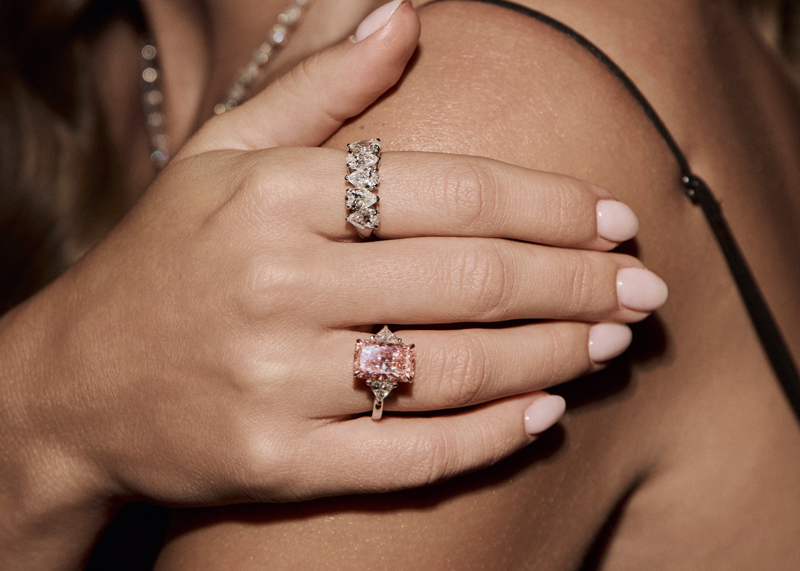
Morganite has the better origin story. In 1910 the gemmologist George Frederick Kunz – Tiffany’s man, and one of the great characters of the trade – identified pink beryl as distinct and named it after his most enthusiastic client, the banker J. P. Morgan, who had been quietly assembling one of the finest gem collections in the world. A stone named after a collector rather than a place or a property, which feels apt for something this personal. The colour runs from barely-there blush to warm peach, and it does something no diamond can: it changes what it does against skin rather than simply reflecting the room.
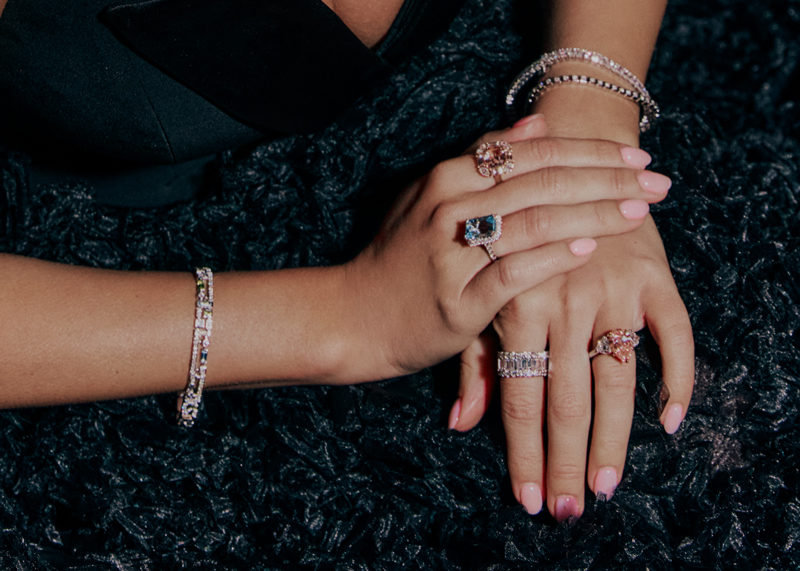
Then there is tourmaline, the most gloriously chaotic gem in the business. The name comes from the Sinhalese turamali, roughly ‘stone of mixed colours’, which was less a name than an admission of defeat – early traders simply could not categorise what they were being sold. Tourmaline occurs in more colours than any other gem species, sometimes several at once within a single crystal. It also carries a genuinely strange property: heat it, and it becomes electrically charged at one end. Eighteenth-century Dutch merchants warmed tourmalines by the fire and used them to draw ash from their pipes, which is a very particular kind of showing off.
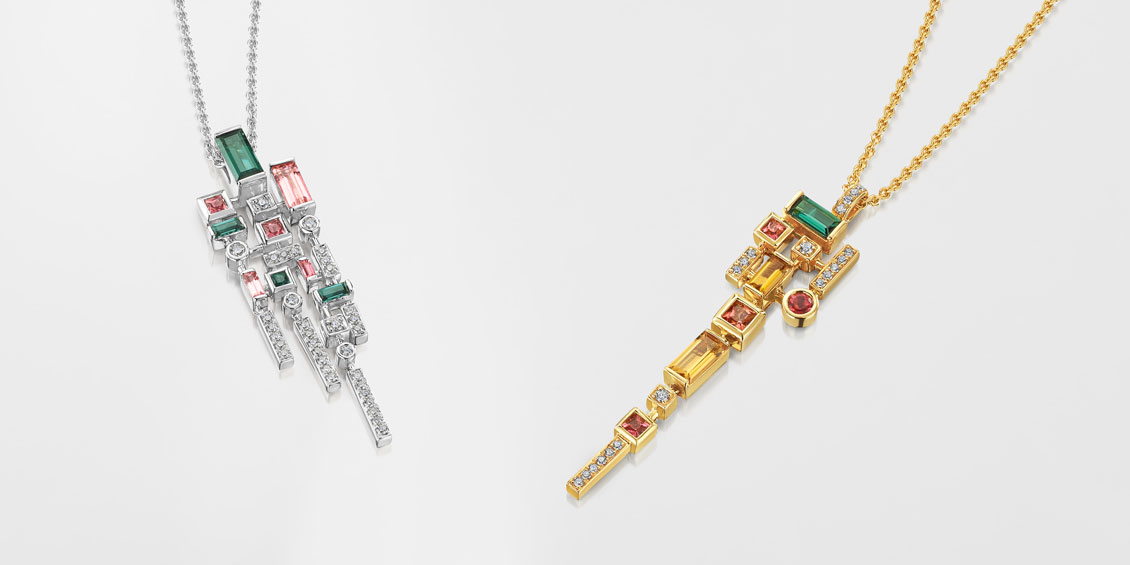
ROX has put its tourmaline into Code, which is the correct decision. Code is the house’s sharpest, most architectural line, and it holds tourmaline’s saturation in a way a softer setting would blur. (Code Tourmaline Necklace is GBP 8,500; the Code Tourmaline and Diamond Ring, GBP 6,900).
THE HARDER PART
All of which is romance, and romance is easy. Setting the things is where it gets serious.
A diamond is the hardest natural material on earth, so a setter can be relatively robust with it. Beryl sits at 7.5 to 8 on the Mohs scale and tourmaline at 7 to 7.5 – plenty durable for daily wear, but a different proposition under the tools. Morganite in particular can carry internal tensions that make it unforgiving of pressure applied in the wrong place at the wrong angle. Every claw closed over a coloured stone is a small negotiation, and the fact that ROX does its sizing and much of its setting work in its Glasgow workshop rather than sending pieces out is not incidental to how these look.
The cutting follows a different logic too. A diamond is cut for brilliance – proportions calculated to return light to the eye as efficiently as physics permit. A coloured stone is cut for colour. The cutter works to deepen and even the hue, orienting the rough to the crystal’s own axis, sometimes accepting a slightly less dazzling shape because it yields a better blue. Entirely different craft, entirely different object – and the reason two aquamarines of identical weight can be worlds apart in price.
The settings do quiet work as well. Look at what the halo is actually for: not decoration, but contrast. A ring of colourless brilliance around a pale blue centre makes the blue read as more itself. The same trick in reverse can make a morganite look both delicate and definite.
MADE, NOT BOUGHT
The ready-to-wear range runs from dress rings through the full Code collection, with Vow and Love carrying aquamarine into engagement territory. For anything that exists nowhere else, ROX’s bespoke service will build around a single stone from a blank sheet – which is, for coloured gems, rather the point, since no two are the same to begin with. Here is where coloured stones diverge most sharply from diamonds, and where ROX’s bespoke service stops being a nice-to-have and starts being the sensible route in.
ROX’s process runs to five stages and starts, refreshingly, with a conversation. The consultation is deliberately low-stakes – nobody expects you to arrive with a finished idea, though if you have Pinterested the entire thing to death, that works too. From there the in-house design team translates the conversation into drawings, and this is a more technical job than the romance suggests. A jewellery designer has to be a mind-reader and an engineer simultaneously: there is no use producing a sketch that is beautiful on paper and structurally impossible at 18ct, or one that ignores what the client can actually spend. ROX describes its designers as working ‘engineer-first’, which is an unglamorous way of putting something important – that the constraint comes first and the beauty is found within it.
Once a design is agreed it goes to a 2D drawing or a 3D CAD render, and for anything genuinely complicated, a wax model, so you can establish not just whether it looks right but whether it feels right on the hand. That distinction matters more than people expect. Plenty of rings photograph beautifully and are intolerable to wear.
THE PART THAT MATTERS MOST
Then the gemmologists get involved and for coloured stones this is the single most consequential stage of the whole process. ROX’s gemmologists are trained not just to grade stones but to identify whether coloured gems have been treated, which is a specialist skill and not a universal one on the high street. They select for colour consistency across a piece too – which sounds minor until you consider a pair of earrings where the two stones sit a shade apart, an error you cannot unsee once you have noticed it.
Mined or lab-grown? Now there is a choice and what that buys is freedom. Lab-grown gemstones cost proportionally less, so the budget can go where it matters – into more expressive side stones or a larger and better-cut centre stone. It is a quietly sensible reordering of priorities. Nobody is asked to compromise. They are asked what they actually desire, which is a better question, and one the trade has historically been reluctant to put.
From there the work goes to ROX’s own setters and polishers. Setting is where a piece is made or ruined: understanding a stone’s facets well enough to choose a setting that admits the maximum light takes years at the bench, and with softer coloured stones it takes nerve as well.
Reckon on eight to ten weeks from first conversation to finished piece, with up to a fortnight more if a rare stone has to be hand-sourced or the setting is especially involved. If you are working to a proposal date, say so at the outset; they will generally find a way. There is also a quicker path: the online ring builder lets you choose a stone and a style and have it made without the full design process, which suits anyone who knows exactly what they want and would rather not spend six weeks discussing it.
WHY IT SUITS COLOUR
All of which explains why bespoke and coloured stones fit together so naturally. When no two stones are the same to begin with, building something around a particular one is not an indulgence – it is arguably the only honest response to what you have bought. The stone dictates the setting rather than the other way round.
And it produces the thing nobody can replicate: not a ring like yours, not a similar shade, but that exact stone, chosen in a room with someone who could tell you precisely what it was and where it came from. Something you made will always mean more than something you bought. It is a line ROX uses, and irritatingly, it happens to be true.
Because that is finally the argument for colour. A diamond says this is rare and I love you, in that order, beautifully, and there is nothing wrong with either sentiment. A coloured stone says something narrower and more specific: this one. This exact blue, because of what it reminded me of. It is a harder thing to choose and a more personal thing to wear – and once you have watched someone light up at the right shade of sea-green, the white-on-white version never looks quite so inevitable again.
The ROX coloured stone collection is available at ROX showrooms in Glasgow, Edinburgh, Newcastle, Leeds, Liverpool and London, and at rox.co.uk. Bespoke design consultations by appointment.
CONTINUE READING
MIDNIGHT FEAST
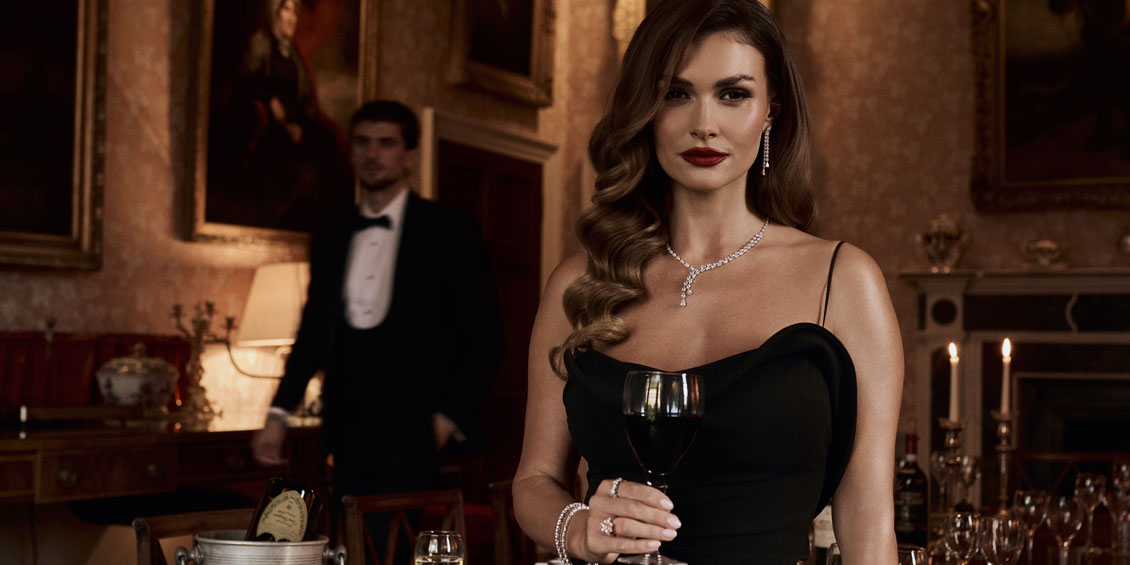
A decadent feast unfolds after dark, where elegance meets a hint of beautiful chaos. Statement jewellery take centre stage in a scene of indulgence and intrigue.
COLOUR CODE
Introducing a new addition to ROX Code Collection. Diamonds, tourmalines and colours unite in a radiant new era of expression.

OUT OF THIS WORLD
ROX marks 10 years of it’s iconic Cosmic collection with a high jewellery creation, Supernova, inspired by the beauty of the cosmos. And it is stellar.